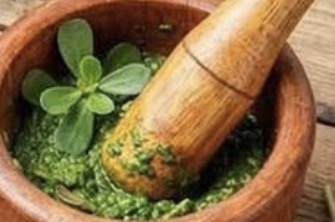
The implication is clear: crush this plant, put it on your back, and it will pull out lung mucus, clean your lungs, or cure a respiratory infection.
That is not true. No poultice on the back cleans mucus from inside the lungs. Purslane is a nutritious edible leaf, but putting a green paste on your skin does not treat bronchitis, pneumonia, asthma, or any lung condition. The lung image with dripping yellow mucus is a stock illustration designed to scare you.
Here is what purslane actually is, what it can and cannot do, and what to do if you have chest mucus.
What Is the Plant in the Photo
The plant is purslane, Portulaca oleracea, known as rjla or bakla in Morocco and the Middle East, and rajlah in many Arabic regions. It is a common wild green with succulent leaves and reddish stems, found in gardens and markets in summer.
It is one of the most nutritious wild greens: high in omega-3 fatty acids for a leafy green, vitamin A, vitamin C, magnesium, potassium, and fiber. It is eaten raw in salads, cooked in stews, and sautéed like spinach. It has a slightly salty, lemony taste.
It is food, not a lung treatment.
Why a Back Poultice Does Not Clean Lungs
Your lungs are inside your chest cavity, protected by ribs, muscles, and a membrane called pleura. Mucus inside your airways is produced by the lining of your bronchi. It is cleared by tiny hairs called cilia that sweep mucus up, and by coughing.
A paste spread on the skin of the back cannot cross skin, muscle, ribs, and pleura to reach inside the lungs. Skin is a barrier. It does not吸 out mucus. The idea of “drawing out” lung infection through the skin is folklore, not physiology.
Putting raw crushed plant paste on a large area of skin, as shown in the bottom right image, carries real risks:
- Skin irritation and burns: purslane contains oxalates and plant acids. Crushed raw leaves under occlusion for hours can cause irritant dermatitis, redness, itching, blistering.
- Infection: raw garden plants carry bacteria and soil. Applying them to broken or sweaty skin can cause bacterial skin infection.
- Allergic reaction: some people develop contact dermatitis from plant pastes.
- Delaying care: someone with pneumonia, asthma flare, or bronchitis who uses a back paste instead of seeking medical care can get much sicker. Chest infections can become severe quickly.
Do not apply purslane or any raw plant paste to your chest or back to treat lungs.
What Purslane Can and Cannot Do
What it can do as food: - Provides nutrients: omega-3 ALA, vitamins, minerals. Good as part of a Mediterranean-style diet.
- Provides fiber that supports general health.
- Adds flavor to dishes without salt.
What it cannot do: - Cure bronchitis, pneumonia, asthma, COPD, or COVID
- Remove mucus from lungs
- Replace antibiotics, inhalers, or other prescribed respiratory medication
- Detox or clean lungs, lungs are not cleaned by pastes
There are no human clinical trials showing purslane, eaten or applied, treats respiratory infections or removes lung mucus. Small lab studies on antioxidants do not equal lung treatment.
Who Should Be Careful Eating Purslane
As food in normal amounts, 1 cup cooked occasionally, purslane is safe for most people. As a large medicinal dose, be careful: - Kidney stones and kidney disease: purslane is high in oxalates. People with a history of calcium oxalate stones or chronic kidney disease should eat it only in small amounts and not daily, and drink plenty of water. Talk to your doctor.
- Blood thinners and low blood pressure: high vitamin K and potassium. If you take warfarin or blood pressure medication, keep intake consistent and moderate.
- Pregnancy: purslane has traditionally been used in large medicinal amounts as a uterine stimulant. Culinary amounts in salad are generally considered safe, but avoid large medicinal doses or supplements when pregnant.
- Blood sugar: may slightly lower blood sugar in animal studies. If you take diabetes medication, monitor glucose.
Do not take purslane supplements, capsules, or concentrated extracts without medical advice.
What Actually Helps Mucus and Chest Congestion
If you have mucus in your chest, cough, and congestion:
- Hydration and rest
Drink water, warm teas, and soups. Warm fluids help thin mucus and make coughs more productive. Rest helps your immune system. - Humid air and honey
A cool-mist humidifier, steam from a shower, and saline nasal rinse can ease congestion. For adults and children over 1 year, a teaspoon of honey in warm water can soothe cough, evidence is better than for many over-the-counter syrups. Never give honey to children under 1 year. - Do not suppress a productive cough completely
Coughing is how your body clears mucus. Only use cough suppressants if your doctor advises, especially at night. - Avoid smoke and dust
Tobacco smoke, cooking smoke, and dust irritate airways and increase mucus. This is especially important for asthma and COPD. - Food support
Eat purslane as food if you like it, not as medicine. Wash it thoroughly to remove soil.
Safe Purslane Salad – as food only:
- 2 cups fresh purslane, washed well, thick stems removed
- 1 tomato, diced
- 1/2 onion, thin sliced
- Lemon juice, olive oil, salt
Toss and eat fresh. This is a nutritious salad, not a lung cleanser.
When to See a Doctor Urgently
See a doctor promptly if you have: - Shortness of breath, wheezing, chest pain or pressure
- Fever over 38.5°C lasting more than 2 days
- Mucus that is bloody, rust-colored, or foul-smelling
- Cough lasting more than 3 weeks
- Blue lips, confusion, drowsiness, or difficulty speaking in full sentences
- Child, elderly adult, or person with asthma, COPD, heart disease, diabetes with new chest symptoms
These can be pneumonia, asthma exacerbation, or other conditions needing prescription treatment, oxygen, or hospital care. Do not treat with a back poultice.
Call emergency services for severe breathing difficulty. In Morocco dial 15 / 19 / 112.
The Bottom Line
Purslane is a delicious, nutritious wild green. It belongs in your salad bowl and your tagine, not smeared as a thick green paste on your back to cure lung disease.
The image with lungs dripping yellow mucus and a back covered in green paste is health misinformation. No poultice removes mucus from inside your lungs. Applying raw plant paste to large skin areas risks irritation and infection and delays real care.
Enjoy purslane as food, washed well, in normal portions. For mucus and chest symptoms, drink fluids, rest, avoid smoke, use honey and humid air for comfort, and see a doctor for persistent or severe symptoms. Your lungs need medical care, not a green back mask.
RV